
Maya: Good morning, anglers. It's Monday, October fifth, twenty twenty six, and you're listening to Tides and Fishing for Fort Lauderdale, your daily check on the water before you decide where the boat is going.
Devon: I'm Devon, and that's Maya. This morning the water is giving us the biggest pushes of the week. Every high tide today is flagged above normal at Port Everglades, so let's get right to the times.
Maya: First high washes in at four eleven this morning at two point nine five feet. Then it drains out to a low of just zero point six feet at ten twenty. The afternoon high is the big one — four fifty seven P M, three point one six feet. Then one last low at eleven oh two tonight at zero point eight two feet.
Devon: So today's peak runs more than two and a half feet higher than today's low — that's serious movement, and movement is what concentrates bait at the inlets. Tomorrow, Tuesday, it's nearly identical but a touch bigger: high at five twenty one A M at three point oh nine feet, low at eleven twenty five A M, then a three point two three foot high at five fifty five P M — the tallest water in this whole stretch.
Maya: Those are king tide readings, folks. The Noah tide station at Port Everglades has flagged all three days this week as above normal. And here's why it matters for fishing: those big swings mean hard outgoing currents, and hard outgoing currents mean mullet pouring out of the inlets right into waiting mouths.
Devon: And that is exactly what Captain Alan Sherman's South Florida forecast says is happening. The fall mullet migration is going off right now. Huge schools of mullet are sliding south along the beaches and flooding into ocean inlets, including Port Everglades, and the predators are gorging.
Maya: Let's name names. At the inlets and in the surf, tarpon, snook, big jack crevalles, barracuda, and sharks are feasting on mullet. Beach, pier, and jetty anglers are also picking up ladyfish, bluefish, and Spanish mackerel. Glass minnows, pilchards, and finger mullet are thick along the sand, so the bait is there for the taking — cast a net if you can.
Devon: Cross-checking with Captain Vinnie Sacks's Fort Lauderdale report from last week, the offshore bite backs it up. Offshore, big mullet schools are sliding down the coast, and kingfish, sailfish, blackfin tuna, mahi, wahoo, bonito, sharks, and barracuda are taking turns crashing them, mostly in eighty to three hundred feet of water.
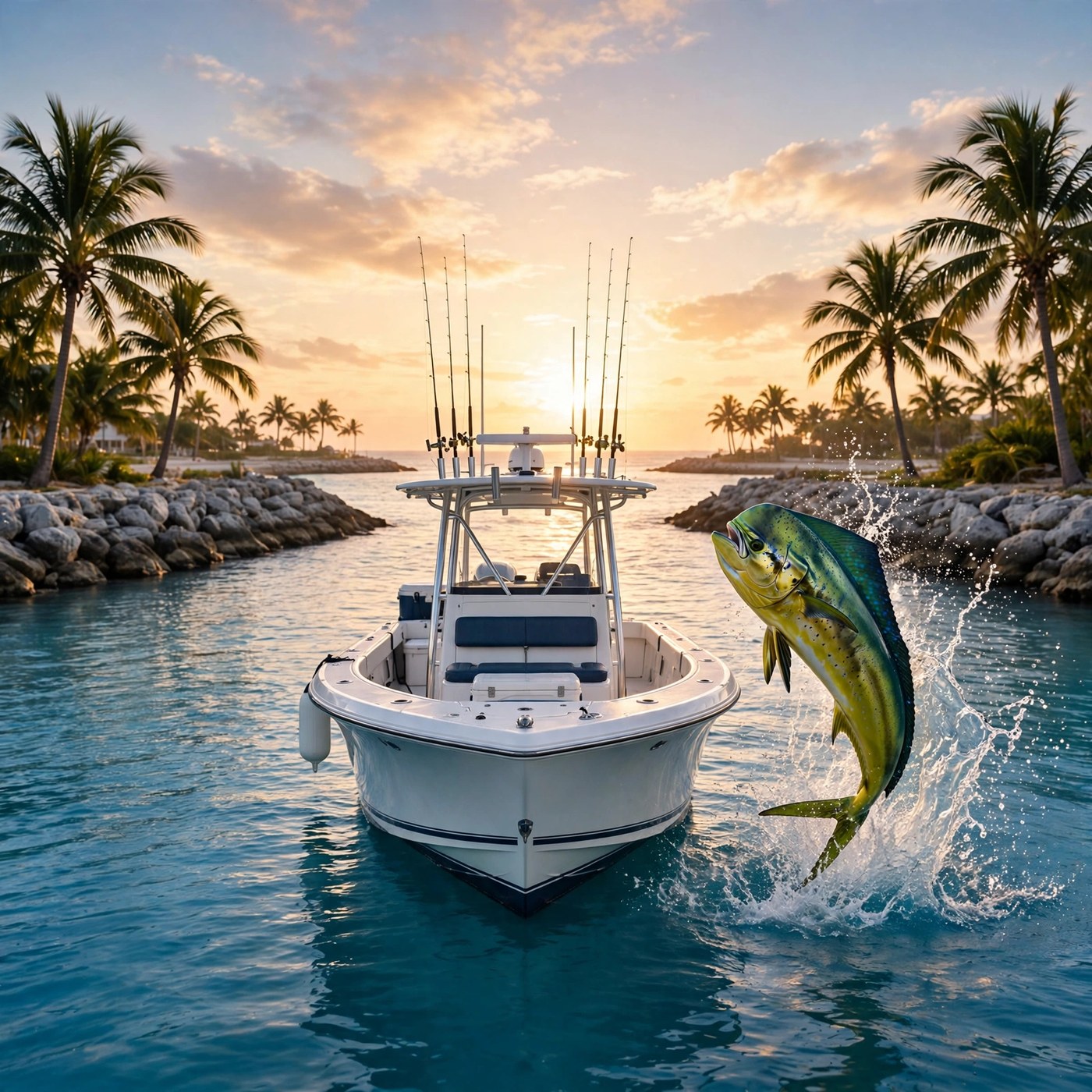
Maya: Vinnie adds a detail worth stealing. With all the recent rain, the inshore water has a tea color, and on the outgoing tide it meets the blue Gulf Stream water and forms a visible tide line. Troll the blue side of that line, he says, and the mahi fishing has been, and I'm quoting, straight money. His crew put forty mahi in the boat on one trip last week, averaging eight to twelve pounds, with multiple hookups at a time — keep a casting rod ready.
Devon: Daytime bottom fishing has been very good too. Mutton snapper, yellowtail snapper, porgies, grunts, and toros over shallow wrecks and rock piles in eighty to one hundred twenty feet of water. Ballyhoo and Spanish sardines are the top baits. And the nighttime reef bite is still producing yellowtails schooled up on the deeper reefs.
Maya: Quick word on the moon, because it affects the night bite. Tonight's sky is moonless — the moon sets before sunrise — so those nighttime yellowtails should chew fine, and you'll actually be able to see the stars.
Devon: Let's talk weather, because that's your go or no go. The National Weather Service Miami marine forecast for the coastal waters from Deerfield Beach to Ocean Reef, out twenty nautical miles, keeps it simple. Tonight and Monday, southeast winds five to ten knots, seas under two feet, intracoastal light chop. Tuesday is even calmer — south winds around five knots, seas under two feet, smooth inside. No small craft advisories, no warnings at all. Green light for small boats through Tuesday.
Maya: Do watch Wednesday, though — winds swing southwest and seas build to two to four feet, occasionally five. Not a warning yet, but if you're planning a midweek trip, that's the day to re-check.
Devon: Now the night sky, for the anglers staying out late or running before dawn. After sunset at about seven oh two tonight, and true darkness around eight nineteen, Saturn climbs high in the eastern sky, glowing steady at thirty nine degrees up. The waning crescent moon is only about a third lit and it's long gone by evening, so the water's edge gets a genuinely dark sky.
Maya: So find a dark spot, look east past the city glow, and you'll catch Saturn holding court. And around seven twenty eight, watch low in the southwest — the International Space Station slides across, a steady bright dot with no blinking lights.
Devon: That's your water for Monday, October fifth. Big tides, hungry predators, flat calm, and a dark sky full of stars. We're back tomorrow morning with Tuesday's tides and the latest bite.
Maya: Tight lines, Fort Lauderdale. See you at the inlet.